X
- 4.8
- Rating
- 1.00B
- Installs
- Free
- Price

 Analysis by App-foxy
I use X as a fast-moving news and conversation app rather than as a replacement for a carefully edited newspaper. Its biggest strength is immediacy: a developing story, public reaction, expert comment, or local update can appear in the same stream within moments. Its biggest weakness is that speed also brings noise, repetition, arguments, advertising, and confident posts that still need checking. That combination makes X unusually useful when I approach it with a clear purpose, but tiring when I open it without one.
Developed by X Corp., this free News & Magazines app has grown into a broad social platform with more than a billion installs and an average rating of 4.6 from roughly 24 million ratings. Those figures explain its reach, but they do not automatically make every part of the experience good. I found that the value depends heavily on who I follow, how I organize the timeline, and whether I treat posts as leads rather than finished reporting.
How X works as a news and social feed
The basic experience is familiar: I follow accounts, read short posts, view images and videos, join conversations, and publish my own updates. In practice, the app feels less like a single publication and more like a live noticeboard. Journalists, public figures, companies, specialists, eyewitnesses, fan communities, and ordinary users all occupy the same space. That mixture is what gives it energy, but it also means the quality of one post tells me very little about the next one.
In-Depth Coverage of X
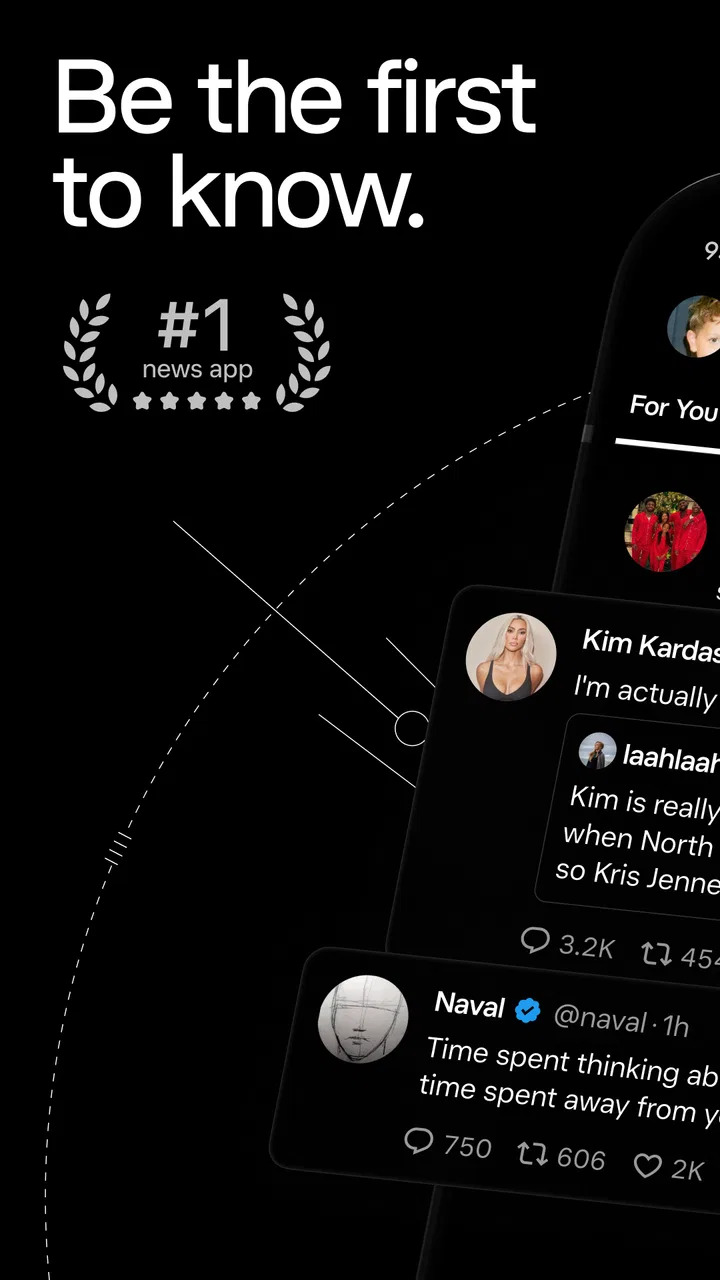
The store summary presents X as a place for breaking news, social media, and Grok AI explanations of posts. I see the AI angle as a useful layer for understanding a busy conversation, not as a substitute for reading the original material. When a topic is full of abbreviations, inside references, or competing claims, an explanation can help me get oriented. I still prefer to open the source post, inspect the context, and compare reporting before treating an explanation as reliable.
The most practical way to use X is to build separate habits for discovery and verification. I may notice a developing event through the app, then move to an established news outlet, an official statement, or a primary document. This workflow is more dependable than assuming that the most shared post is the most accurate one. X is excellent at showing me that something is happening; it is less consistent at telling me exactly what happened.
Following people is more important than following topics
Topic-based browsing can be entertaining, but my timeline becomes much more useful when I deliberately choose accounts with different roles. For a local issue, I might follow a municipal source, a reporter, a subject specialist, and a community account instead of relying on one viral thread. For technology, I get better results from combining product announcements with independent commentators who explain practical consequences. This reduces the chance that one viewpoint quietly becomes my entire information diet.
I also recommend reviewing the timeline whenever it starts feeling repetitive. Popular posts can dominate attention even when they add nothing new. Muting an account or a recurring phrase is often more effective than abandoning the whole service. The distinction matters: I can keep access to valuable live information while removing a source of constant irritation.
Lists are especially useful for this kind of organization. I use them as focused reading rooms: one for local news, another for professional interests, and another for people whose posts I want to catch without depending on the main recommendation feed. This is one of the less obvious ways to make X feel calmer. It turns a giant public stream into smaller, intentional groups.
A realistic everyday use case
Imagine that I am commuting when a transport disruption begins. X may surface a notice from the operator, a photo from a passenger, and comments from people describing which routes are still moving. I can quickly form a picture of the situation and adjust my plans. The trade-off is that early reports can conflict, old photos can be reposted, and frustrated comments may sound more certain than the evidence allows. I would use the app to find clues, then confirm the final route information through the operator’s official channel.
The same pattern works during a product launch, a weather event, a sports match, or a public announcement. X is valuable when timing matters and when many people are observing the same event. It is less suitable when I need a quiet, linear explanation with background, sourcing, and editorial review built into every article.
What the free experience gives me
The app itself is free to download and use, so a reader can explore its public conversations without paying an entry fee. That makes the basic value proposition straightforward: access to a huge real-time network at no purchase cost. For casual users, that may be enough. I can follow news sources, participate in discussions, save useful posts, and check public reactions without committing to a subscription.
There is also a practical advantage in using one free app for several information needs. Instead of opening separate services for headlines, public commentary, specialist opinions, and immediate reactions, I can often find all four in one place. That convenience is real, although it comes with the responsibility of sorting useful material from distractions.
The free experience is not the same as a controlled reading environment. Advertising, recommended content, trending discussions, and algorithmic choices can interrupt the accounts I intentionally followed. I would not choose X if my main goal were uninterrupted reading. A dedicated news app or a paid publication may offer a more focused experience, especially for someone who values edited presentation over speed and variety.
You May Also Like

 AliExpress - Shopping App
AliExpress Makes Global Shopping Feel Personal, but Shoppers Bear the Risk
AliExpress turns a global marketplace into a pocket-sized discovery engine. Its reach is useful, its shopping loop compelling, and its trade-offs easy to miss.

 Lords Mobile: Kingdom Wars
Lords Mobile Is a Kingdom-Building Routine, Not a Quick Match
A case-by-case verdict on the building, battles, device demands, and social commitments that make Lords Mobile rewarding for some players and exhausting for others.

 PDF Scanner app - TapScanner
TapScanner Makes Paperwork Easier to Capture, Check, and Share
TapScanner makes scanning with a phone feel less like a rescue operation and more like a dependable step in getting work done. Its capture tools are useful, though not flawless.

 Block Blast!
 Shows How Much a Puzzle Game Can Leave Out
A quiet grid game shows why puzzle players increasingly value instant clarity, repeatable skill and low-pressure play—and where the genre still needs to catch up.

 Family Space
 Review: A Shared Routine That Makes Family Life Easier
A parenting app earns its place not by adding more noise, but by making everyday coordination easier. Family Space gets that balance mostly right.

 1Weather Forecasts & Radar
 Makes the Daily Check Worthwhile
A good forecast does more than predict rain. This week's pick turns changing conditions into a clear, practical reason to check before you step outside.
More From Our News Desk
View All News


Optional purchases are listed from $0.99 to $999.99 per item. I would treat those purchases as add-ons rather than part of the essential cost of accessing the social feed. The useful question is not whether I can spend more, but whether an optional upgrade solves a problem I actually have. If I only want breaking conversations and public posts, I would begin with the free access and judge the everyday experience before considering anything extra.
This distinction protects the value assessment. X can be worthwhile without a purchase, but “free” does not mean frictionless. My time is still the cost: filtering low-quality posts, checking claims, and managing attention. Someone who spends an hour scrolling through arguments may receive less value than someone who opens the app for ten minutes with a defined purpose.
Where the app delivers genuine value
Speed is the clearest benefit. Traditional articles often arrive after information has been gathered and edited, while X lets me see the earliest public discussion. That is useful for spotting emerging subjects, finding eyewitness perspectives, and discovering specialists I might not encounter through a normal headline feed. It is also a good place to see how a story is being received, not merely how it is summarized.
The platform can be valuable for niche interests. A small professional community, a technical hobby, or a local group may be more active there than in a conventional forum. Following the right people can expose me to practical explanations, links, corrections, and viewpoints that a general news app would not prioritize. In that sense, X works as a discovery tool as much as a news reader.
Conversation is another strength. I can read a public exchange instead of only seeing a finished article, which sometimes reveals useful questions or competing interpretations. The drawback is that conversation is not automatically expertise. A long thread can look authoritative because it is detailed, while still omitting important evidence. I pay attention to whether the writer links to original material and whether later replies correct the initial claim.
Grok’s explanation feature can help when a post is surrounded by unfamiliar references. I see the best use as orientation: identify the people, event, terminology, or dispute involved, then investigate further. I would not let an automated explanation make the final decision on a sensitive topic. The more consequential the subject, the more important it is to read primary sources and reputable reporting directly.
Trade-offs that become obvious after regular use
The main limitation is the uneven relationship between visibility and quality. A post can spread because it is emotional, amusing, or provocative rather than because it is accurate. Replies may add context, but they can also bury the original point under personal attacks and unrelated promotion. I have learned to slow down whenever a post encourages an immediate emotional reaction.
Context can disappear quickly. Screenshots, clipped videos, and quotations may circulate without the surrounding conversation. A useful habit is to open the original post, inspect its timestamp, read several replies, and look for a direct source. This takes longer than accepting the first version in the feed, but it prevents many avoidable misunderstandings.
Another trade-off is the tension between personalization and breadth. Recommendation systems can introduce me to accounts I would never find on my own, but they can also push content outside my interests or repeatedly show the same kind of argument. A carefully maintained following list gives me more control, while a purely recommended feed is more surprising but less predictable.
The Mature 17+ age classification is important for families. X contains public discussion across adult subjects, strong language, controversy, and material that may not suit younger users. I would not hand it to a child as a general-purpose news app. Parents should consider the nature of open social conversation, not just the label in an app store, before deciding whether it belongs on a young person’s device.
Privacy and attention are also part of the trade-off, even when I am not paying money. A social platform asks me to make choices about what I share, who I engage with, and how much of my day I give to an endless feed. I keep personal posting deliberate and avoid treating public visibility as a private conversation. For readers who want minimal social exposure, a conventional news reader is likely a better fit.
Who will get the most value
X suits people who need fast public updates and are willing to verify what they see. It is particularly useful for journalists, researchers, event followers, professionals tracking a field, and residents looking for immediate local discussion. It also works well for anyone who enjoys direct interaction with writers, creators, organizations, and specialist communities.
It is a good choice for a reader who can create boundaries. I recommend turning the app into a tool rather than a default destination: decide what I am checking, use lists for focused subjects, save useful posts for later review, and leave when the task is complete. That approach preserves the speed of the platform without allowing every recommendation to set the agenda.
I would skip it if I want news that is already filtered, sourced, and presented in a calm sequence. Someone who dislikes public arguments, algorithmic recommendations, or the possibility of encountering disturbing material may be happier with a newspaper app, an RSS reader, or a specialist publication. Those alternatives generally sacrifice some immediacy and conversation in exchange for clearer editorial control.
I would also avoid making X my only news source. Even when the platform points me toward an important story, I want confirmation from sources with a different process. The app is strongest as an early-warning system and a window into public reaction. It is weaker as a complete information diet.
Device, version, and practical expectations
The current version is 12.19.1-release.0, and the listed minimum operating system is Android or iOS version 9, depending on the device platform. That broad compatibility makes it accessible on many older phones, although the experience can still vary with screen size, performance, notifications, and the amount of video in the feed. I would keep notifications selective; alerts for every interaction quickly turn a useful news tool into a constant interruption.
The app is mature rather than child-oriented, and its scale means that the experience changes according to the communities I enter. Two people can install the same application and see very different timelines. That is why I judge X less by its first ten minutes and more by the quality of the accounts I deliberately follow after the initial setup.
For a new user, I would start with a small group of trusted accounts, add a few contrasting sources, and avoid following every suggested profile at once. After several days, I would remove accounts that produce more outrage than information. This simple cleanup has a greater effect on usefulness than any single feature because the feed is ultimately shaped by the material I allow into it.
My buy-or-skip verdict
X is worth trying for free if you want live public conversation, fast leads, and access to specialist communities. I would not pay for optional features merely because the platform is popular. I would first establish whether the free experience fits my routine, whether the timeline can be kept useful, and whether the app gives me information I cannot get more comfortably elsewhere.
My recommendation is positive but conditional. Use X as a quick radar, a conversation layer, and a way to find people or sources worth following. Do not confuse reach with reliability, popularity with expertise, or an AI explanation with final verification. If you enjoy active discussion and can manage the noise, the free access delivers substantial practical value. If you want polished reporting, quiet reading, or strong editorial filtering, a traditional news app is the better choice.
For me, the deciding factor is control. When I use lists, limit notifications, check original sources, and leave after finding what I need, X becomes genuinely useful. When I let the recommendation feed choose every subject and every emotional reaction, the value drops quickly. That makes it a powerful but demanding app: free to start, broad in reach, and best suited to readers who are prepared to curate their own experience.
FAQs for X
01What is X, and what can I use it for?
X is a versatile application designed to provide users with a convenient way to access its main features from a mobile device. Depending on how you plan to use it, the app may help with communication, entertainment, productivity, content discovery, or other everyday tasks. Before downloading, review the store description and screenshots to confirm that its functions match your expectations and device needs.
02Is X free to download and use?
X may be available as a free download, but some features, content, or services can require in-app purchases, a subscription, or an account. I recommend checking the pricing section on the Google Play Store or Apple App Store before installing it. Also look for details about free trials, automatic renewal, advertisements, and whether cancelling a subscription must be done through your device’s store settings.
03Is X safe and suitable for my device?
Before installing X, check that it comes from the official Google Play Store or Apple App Store and verify the developer name, ratings, reviews, and requested permissions. The app may need access to features such as storage, notifications, the camera, microphone, location, or contacts, depending on its purpose. Make sure your operating system meets the listed requirements and avoid unofficial download files.
04Does X require an internet connection or account registration?
The requirements can vary depending on which parts of X you want to use. Some functions may work offline after installation, while online features, synchronization, streaming, messaging, or updated content usually require Wi-Fi or mobile data. Registration may also be necessary to save progress, personalize the experience, or access premium tools. Check the app’s sign-in and offline-use information before downloading.
05What should I know about privacy and data collection in X?
Before using X, read its privacy policy and the data-safety information shown on the relevant app store page. These sections explain what information may be collected, why it is used, and whether data can be shared with third parties. Pay particular attention to account details, location, device identifiers, usage activity, and payment information, and adjust permissions or privacy settings whenever possible.
Pros
- Simple interface that is easy to navigate for first-time users.
- Runs smoothly on most modern Android and iOS devices.
- Useful features are clearly organized and quick to access.
- Regular updates can improve performance and add new functionality.
- Suitable for users who want a straightforward mobile experience.
Cons
- Some advanced features may require in-app purchases or a subscription.
- Performance may vary on older devices with limited storage or memory.
- The app may request permissions users are not comfortable granting.
- Certain features may depend on a stable internet connection.
- Notifications can become distracting if they are not customized.

Gallery